The inspection can come back clean. The seller can breathe out. The buyer can start picking paint colors. And then, sometimes a week or two before closing, an insurance broker calls with a problem that has nothing to do with what the home inspector found.
This happens often enough in Whitefish Bay, Fox Point, Shorewood, and River Hills that it deserves its own conversation, separate from the usual pre-listing checklist. The North Shore's housing stock is old enough, in large enough numbers, that a home can sail through a general inspection and still fail the much narrower test an insurance underwriter applies. Sellers who don't see this coming lose leverage at exactly the wrong moment. Sellers who do see it coming can often solve the problem before it ever reaches a buyer's desk.
The Inspection and the Underwriting Review Are Not the Same Test
A general home inspection is broad by design. It covers the roof, the foundation, the HVAC system, the plumbing, and the electrical panel, but it is a visual, surface-level pass. A home inspector notes what he can see and flags what looks concerning, then leaves the deeper analysis to specialists.
An insurance underwriter is looking for something more specific: will this system fail in a way that generates a claim. For homes over roughly 25 to 30 years old, many carriers request what's known as a four-point inspection, focused narrowly on the roof, electrical, plumbing, and HVAC systems, sometimes performed by a licensed electrician rather than a general inspector. That inspection can flag conditions a standard report waves through, and it can happen after an offer is accepted, not before.
Wisconsin carriers are already applying extra scrutiny to older construction. A 2026 review of the state's homeowners insurance market found that pre-1960 Milwaukee-area properties with original electrical, plumbing, or roofing systems face underwriting challenges, with carriers imposing surcharges, exclusions, or outright conditions before they'll write a policy. One Wisconsin electrical contractor put it plainly: most major insurers operating in the state will flatly refuse to issue a homeowners policy on a property with active knob-and-tube wiring or an obsolete fuse box, independent of anything else about the home's condition.
A Housing Stock Built for Character, Not Modern Code
This matters more on the North Shore than almost anywhere else in Greater Milwaukee, because the age of the housing stock here isn't incidental. It's the point.
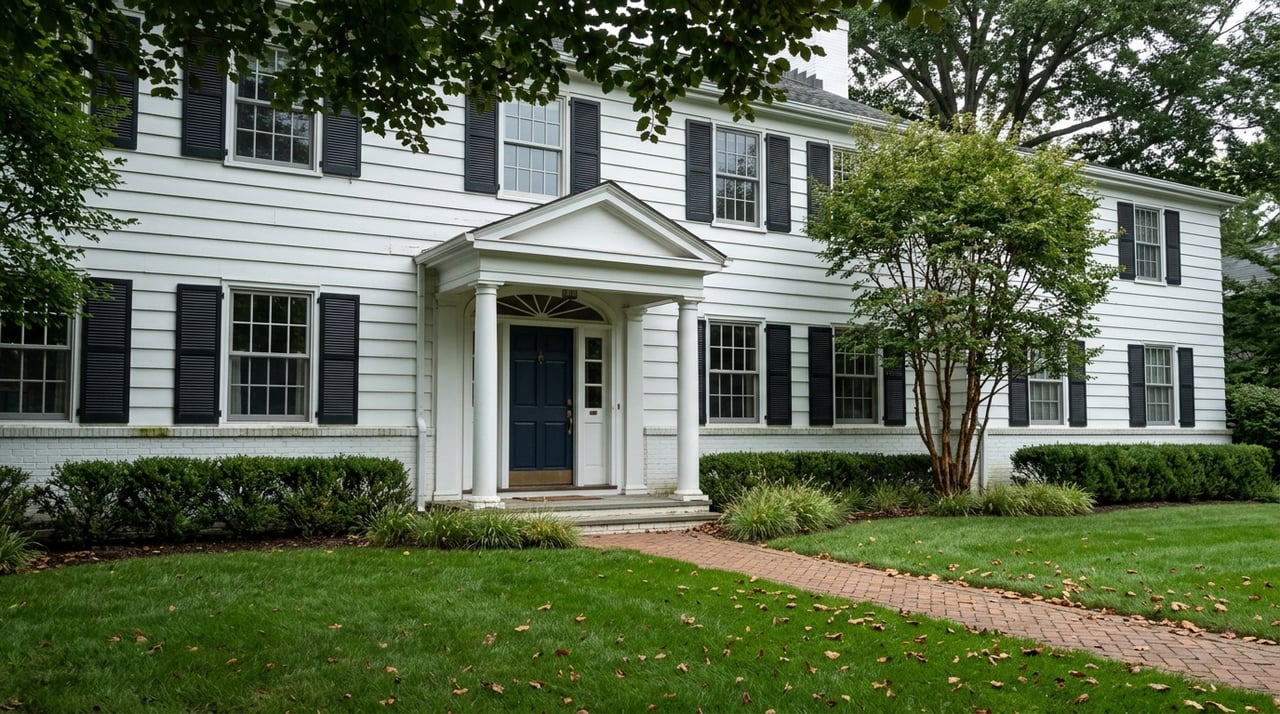
A Wisconsin Historical Society survey conducted between October 2010 and June 2011, led by state historian Joe DeRose and architect Jennifer Lehrke, identified nearly 2,900 potentially historic homes in Whitefish Bay alone, a village whose own building permit records at Village Hall date back to the 1920s. The village maintains its own list of 131 historic properties through its Historic Preservation Commission, and researchers identified a dozen distinct historic neighborhoods based on subdivision plats and shared architectural character. Colonial Revival is the most common style, Tudor Revival the second most common, and Whitefish Bay carries an unusually high concentration of 1920s Mediterranean Revival homes, along with rare Spanish Colonial and Monterey-style properties that architects doing the survey said they hadn't expected to find in Wisconsin at all.
Fox Point tells a similar story. Much of its housing was built between the 1920s and 1950s, with historic mansions still standing along Lake Drive from that era. This isn't a neighborhood with a handful of old outliers scattered among newer construction. It's a market where pre-1950s systems, wiring included, are the baseline, not the exception.
What Actually Trips the Underwriter
Three conditions account for most of the friction, and they map almost exactly onto what a North Shore home built in the 1920s through 1950s is likely to still have somewhere in its walls.
Knob-and-tube wiring is the most consistently flagged. It has no ground wire, its cloth and rubber insulation degrades with age, and it relies on fuses rather than circuit breakers. Many carriers decline to write a policy at all if it's still active anywhere in the home. National estimates for a full replacement, based on industry pricing data, run from roughly $12,000 to $36,600 depending on the size of the house.
Aluminum branch wiring, common from the mid-1960s into the 1970s, is treated somewhat more flexibly, but insurers still scrutinize it closely and may require documented repairs by a licensed electrician before binding coverage.
Galvanized steel plumbing, standard in homes built before the 1960s, corrodes from the inside over decades until it fails. Many insurers now require replacement with copper or PEX piping before they'll offer full coverage on a home that still has it.
| System | Era Commonly Found | Typical Insurer Response |
|---|---|---|
| Knob-and-tube wiring | Pre-1940s | Frequently declined outright, or written only at higher premiums |
| Aluminum branch wiring | Mid-1960s to 1970s | Scrutinized closely, often requires documented professional repair |
| Galvanized steel plumbing | Pre-1960s | Often requires replacement with copper or PEX before full coverage |
A home can have any one of these and still pass a standard inspection without a flag, because the inspector isn't underwriting the policy. He's describing the house.
Wisconsin's Backstop, and Why You Don't Want to Need It
Wisconsin does have a safety net for homes that conventional carriers won't touch. The Wisconsin Insurance Plan exists specifically for property owners who've had difficulty securing coverage through the standard market. It operates like a small insurance company in its own right, underwriting applications, inspecting properties, and adjusting claims for homes the voluntary market has passed on.
State regulators also require insurers to give homeowners real notice before pulling coverage. Under Wisconsin law, an insurer generally must provide at least 60 days' written notice before a non-renewal takes effect, and if it fails to do so, coverage continues under the existing terms for up to a year. That protection matters for current owners, but it does nothing for a buyer trying to bind a brand new policy in the middle of a transaction. A buyer facing a decline has to solve the problem inside a financing contingency window, not over the course of a year.
None of this means a North Shore home with older systems can't sell. It means the insurance conversation needs to happen earlier than most sellers assume, ideally before the home ever goes live.
What This Means Before You List
The sellers who avoid a late-stage scramble are the ones who treat the electrical panel and the plumbing runs as seriously as they treat curb appeal. A few things make a real difference:
Get a licensed electrician's assessment before listing, not after an offer arrives. A written letter confirming the wiring type and condition, or documenting that a rewire has already been completed, gives a buyer's insurance broker something concrete to work with instead of a guess.
If knob-and-tube wiring is still active anywhere in the home, price in the cost of addressing it, whether that means a full rewire before listing or a credit built into the negotiation. Buyers will find out one way or another, and it's better to control the timing than to have it surface during underwriting.
Disclose what you know. Wisconsin's standard disclosure process doesn't require sellers to become electricians, but if you've had panel work done, had a rewire completed, or know your plumbing has already been updated to copper or PEX, put that on paper. It shortens the underwriting conversation for everyone.
A Few Questions Sellers Ask Directly
Does this apply to homes that have already been updated? No. A home with a modern panel, updated copper or PEX plumbing, and no remaining knob-and-tube wiring generally underwrites like any other property its age. The issue is specific to homes where original systems are still in place, not to older homes in general.
Will a buyer's lender catch this before their insurer does? Not necessarily. Lenders check that a policy exists and meets minimum coverage requirements. They don't typically evaluate wiring type themselves. The insurance underwriter is often the first party in the transaction to look closely at the electrical system's age and condition.
Should I get an electrical inspection even if my recent inspection didn't flag anything? If your home was built before 1960 and you've never had a dedicated electrical assessment, it's worth the modest cost. A standard home inspection includes only a general electrical check. A licensed electrician looking specifically for insurance red flags is a different, more targeted review.
If you're weighing a sale in Whitefish Bay, Fox Point, Shorewood, or River Hills and want a clear read on what your specific home's systems mean for a smooth closing, Brandon Tyler can walk through it with you before you list, not after an offer is already on the table. Let's Talk.